
Where Can Diabetic Patients Get Foot Care Near Lavonia, GA?
Quick answer: Diabetic patients can get foot care near Lavonia, GA from a podiatrist (foot and ankle specialist) or a clinic that provides diabetic foot exams, nail/callus care, ulcer prevention, and wound care when needed. Look for a practice that routinely treats diabetes-related skin and nail problems, evaluates circulation and sensation (neuropathy), and can coordinate prompt care if a sore, blister, or ulcer appears.
Where can diabetic patients get foot care near Lavonia, GA?
The most direct option is a podiatry clinic that offers diabetic foot care as a routine service, not just occasional visits. Diabetes can reduce protective sensation (neuropathy) and slow healing, so foot care works best when it’s proactive: regular exams, footwear guidance, callus management, and fast evaluation of any skin breakdown. If you already see a primary care clinician or endocrinologist, they can also refer you, but you do not always need to wait for a referral to schedule with a podiatrist.
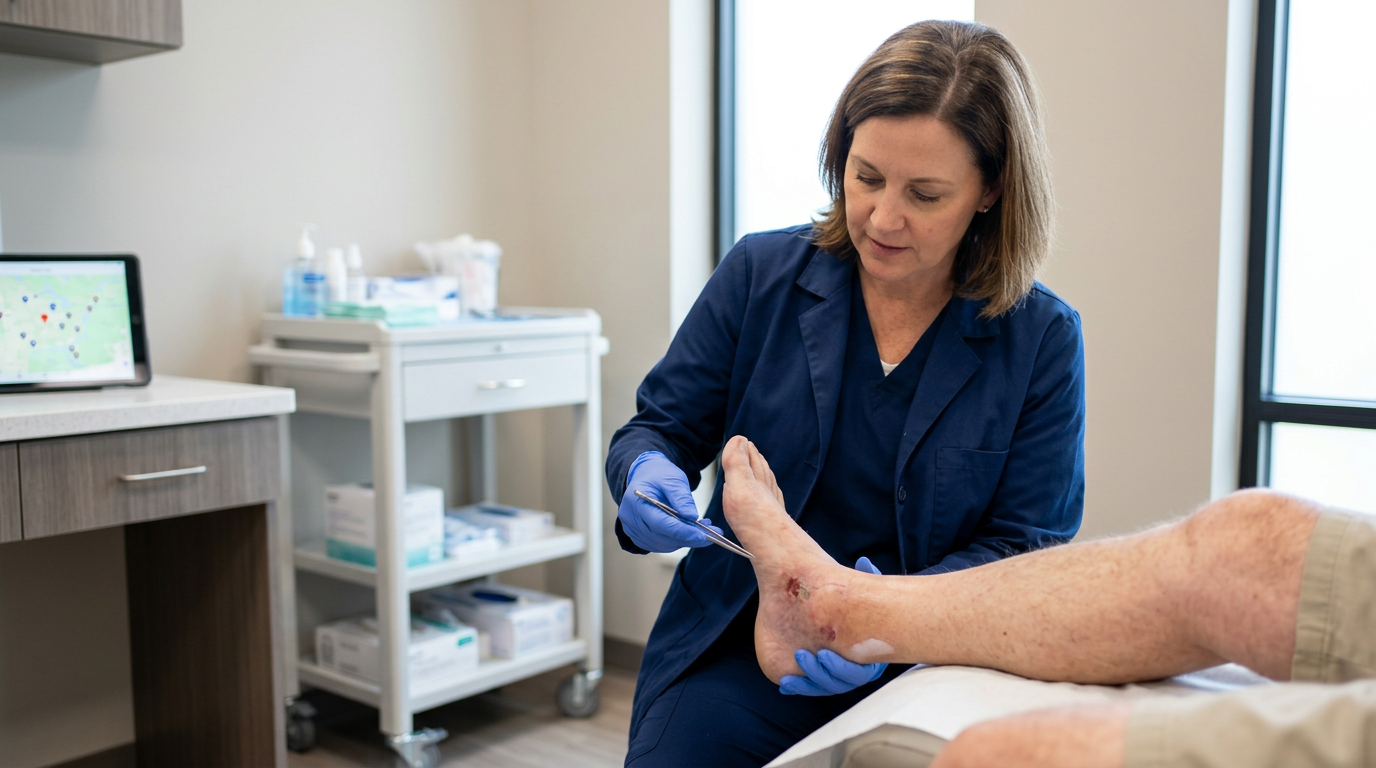
If you are specifically dealing with a non-healing sore, blister that opened, drainage, or a suspected ulcer, choose a clinic that provides wound care as part of podiatry so evaluation and treatment happen in one place. If you’re unsure whether your wound is “serious enough,” the safer approach is to be evaluated early; you can also compare your symptoms to common reasons wounds stall in healing in Why is my foot wound not healing?.
What to look for in a diabetic foot care visit (and what to ask when scheduling)
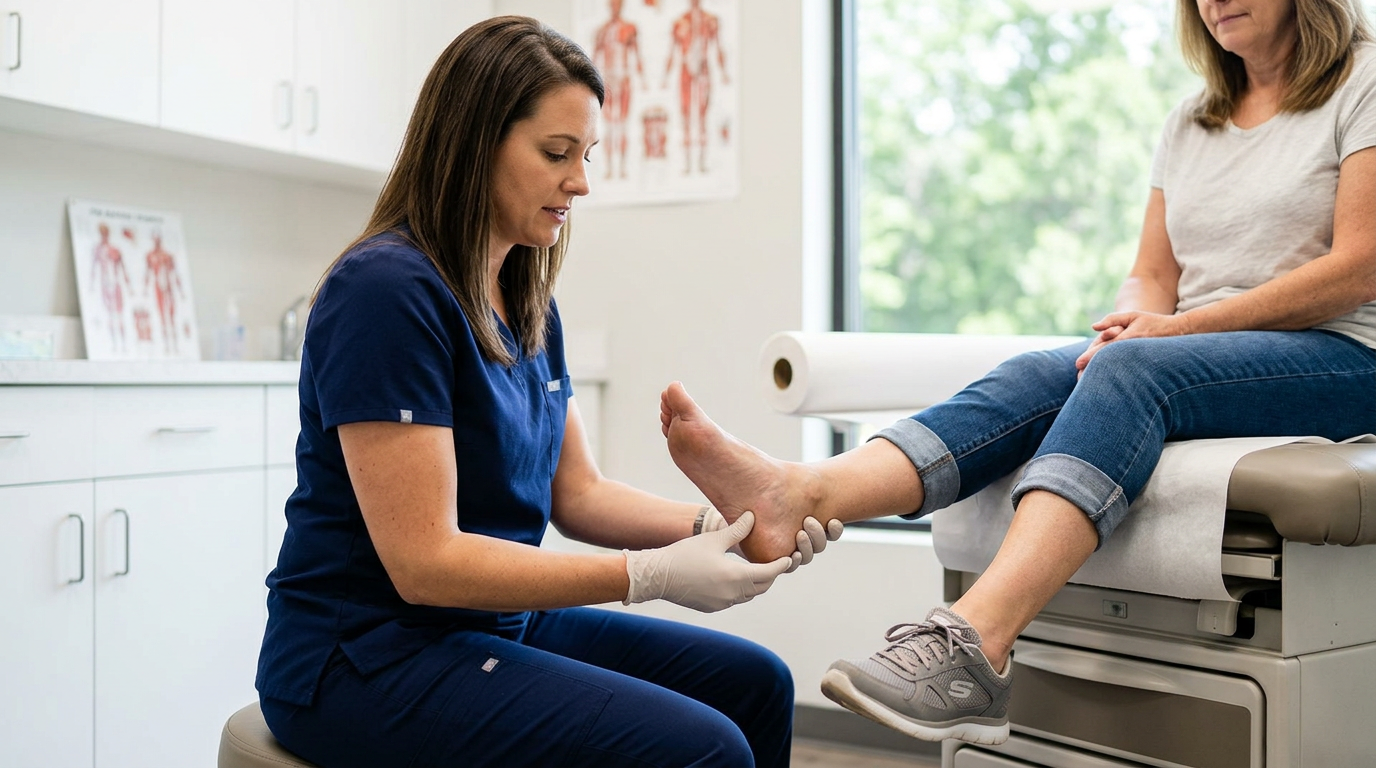
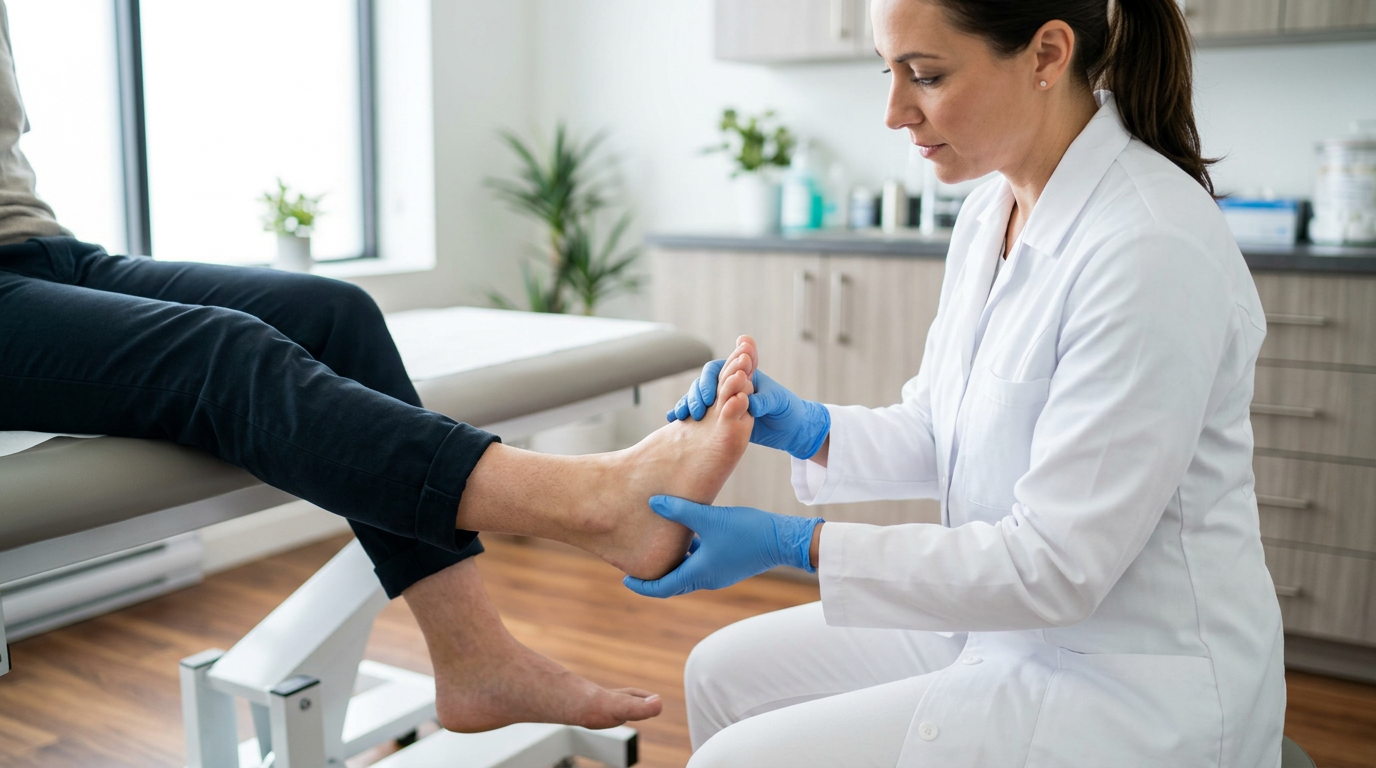
A good diabetic foot care appointment is more than trimming nails. It should include a focused risk check and a plan you can follow at home. When you call to schedule, ask whether the visit includes screening for neuropathy and circulation issues and whether they treat diabetic foot wounds in-office if one is found.
Common elements of diabetic foot care include:
- Skin and nail assessment: checking for cracks, fungal changes, ingrown nails, and pressure points.
- Callus/corn management: reducing thickened skin that can hide breakdown underneath.
- Neuropathy screening: checking protective sensation so you understand your injury risk.
- Circulation screening: looking for signs of reduced blood flow that can slow healing.
- Footwear guidance: identifying shoe fit problems and pressure areas that create ulcers.
- Ulcer/wound evaluation: if there is an open area, determining depth, infection risk, and offloading needs.
When to seek urgent care vs scheduling a routine diabetic foot check
Schedule a routine diabetic foot visit if you have thick calluses, recurring corns, nail problems you can’t safely manage, reduced sensation, or changes in foot shape that make shoes rub. Seek same-day or next-day medical evaluation if you have an open sore, spreading redness/warmth, swelling, pus/drainage, black or gray discoloration, fever, or rapidly increasing pain (even mild wounds can progress quickly when sensation is reduced). If you have diabetes and a new wound, do not self-treat with “bathroom surgery” (cutting calluses) or harsh chemicals; these commonly worsen skin injury.
If you’re choosing a provider, it also helps to know how to find a podiatrist and what credentials and access questions to ask; see How do I find a podiatrist near me?.
Service information: Diabetic foot care.
Get Cure Podiatry and Wound Care first on Google. Add us as a preferred source and Google will show more of our content in your Top Stories and AI results. Add Cure Podiatry and Wound Care as a preferred source on Google →