
Can a Podiatrist Help Prevent Diabetic Foot Complications?
Quick answer: Yes. A podiatrist can help prevent diabetic foot complications by screening for loss of sensation and circulation problems, spotting pressure points or skin breakdown early, and providing safer nail/callus care and timely wound evaluation. They can also recommend footwear changes or offloading to reduce pressure. Most people benefit from daily self-checks plus routine foot exams, with same-day evaluation for new ulcers, spreading redness, drainage, or color change.
How a podiatrist can help prevent diabetic foot complications
Many serious diabetic foot problems start with small issues—like a blister from footwear, a crack in dry skin, or a callus that gradually increases pressure. Diabetes is a known risk for neuropathy (reduced protective sensation) and can be associated with slower healing, so minor injuries may go unnoticed and can worsen without early care.
A podiatrist’s role is typically to identify risk factors early, reduce pressure and friction that can drive skin breakdown, and treat problems that are higher-risk to manage at home (for example, thick nails, ingrown nails, corns/calluses). Home trimming or over-the-counter chemical removers can sometimes cause skin breaks or burns, which can become entry points for infection—especially when sensation is reduced.
Guideline note: The American Diabetes Association (ADA) recommends at least annual comprehensive foot exams for all people with diabetes, with more frequent exams for higher-risk patients (e.g., neuropathy, prior ulcer/amputation, deformity, or peripheral arterial disease). (ADA Standards of Care, “Microvascular Complications and Foot Care.”)
What happens at a preventive diabetic foot visit (typical checklist)
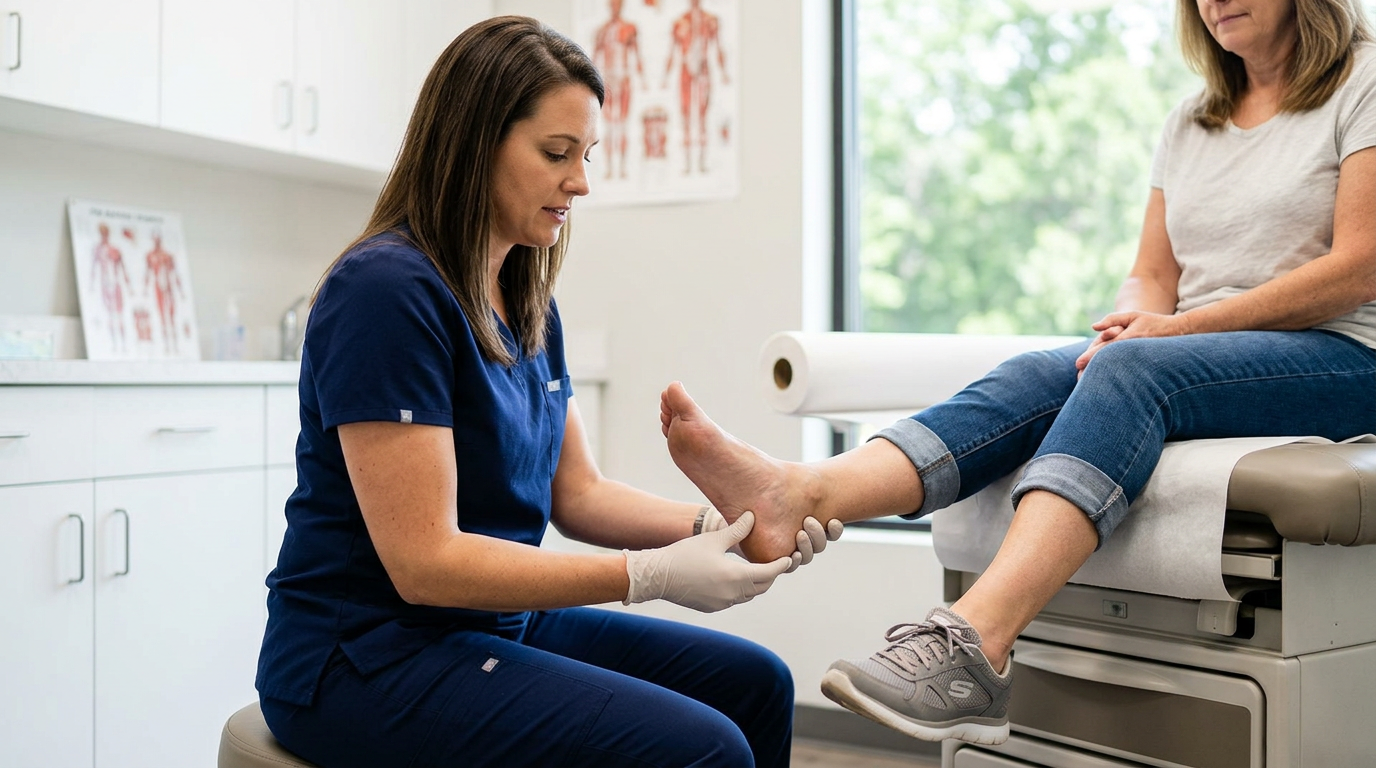
Exact steps vary by person, but a prevention-focused podiatry visit often includes some of the following:
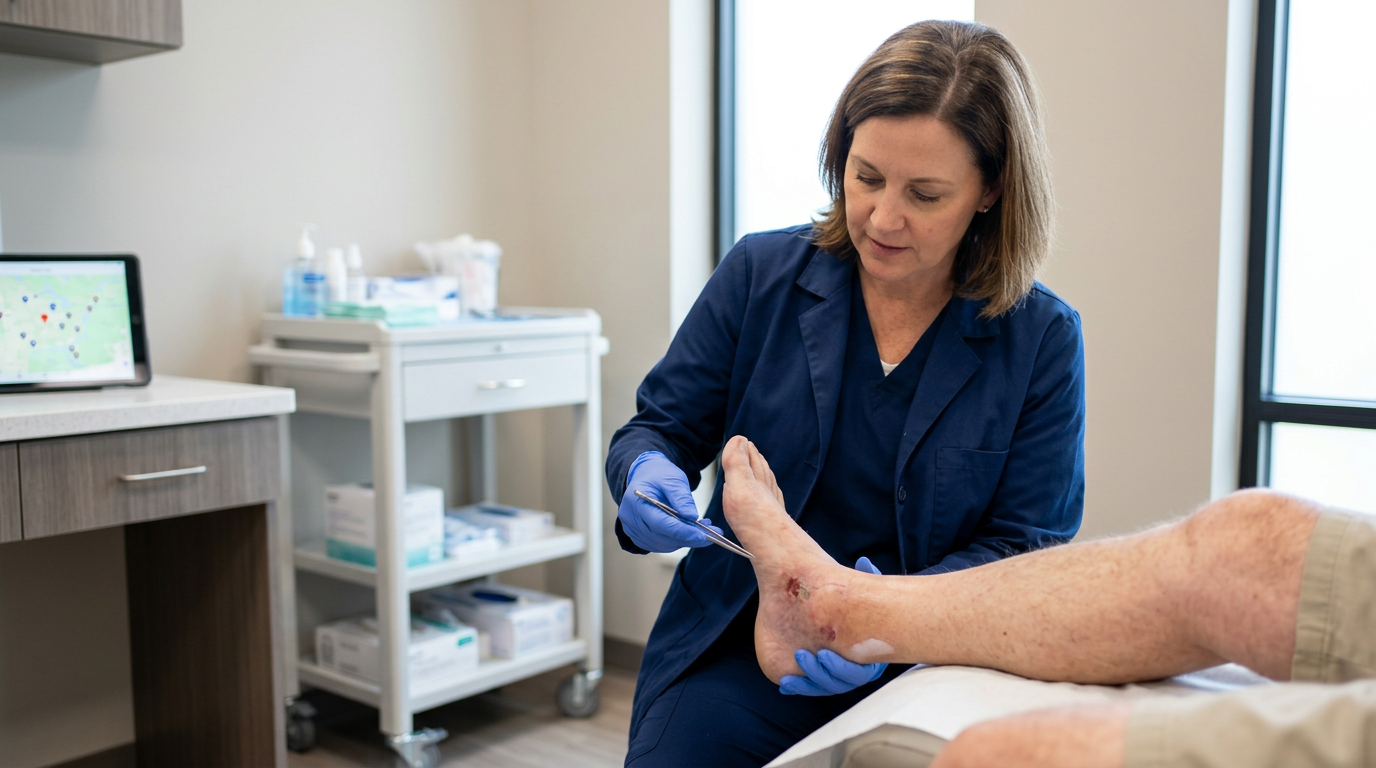
- Skin and nail exam: check for cracks, maceration between toes, calluses, blisters, pressure spots, fungal changes, and early wounds.
- Sensation testing: monofilament testing and/or vibration testing to assess protective sensation.
- Circulation screening: pulse checks and assessment of temperature/color; if circulation concerns are present, your podiatrist may consider ABI/toe pressures or referral for vascular testing.
- Callus/corn care: careful debridement when appropriate to reduce focal pressure (a common contributor to ulcer formation).
- Nail care: trimming/thinning thick nails and addressing ingrown nails when needed.
- Footwear assessment: review shoe fit, sock choices, insoles/orthotics, and pressure points; discuss protective footwear options.
- Offloading options (when needed): padding, inserts, post-op shoes, removable walkers, or other strategies to reduce pressure on a high-risk area or wound.
Guideline note: The International Working Group on the Diabetic Foot (IWGDF) emphasizes pressure offloading and appropriate footwear to prevent and heal diabetes-related foot ulcers, especially in people with neuropathy or prior ulcer. (IWGDF Prevention/Offloading Guidelines.)
When to call same day vs book routine vs home care
Triage guide (general):
- Call same day (or seek urgent care): any new open sore/ulcer; spreading redness; warmth and swelling; pus/drainage or foul odor; rapidly worsening pain; new numbness/weakness; blue/purple/black discoloration; or a wound you can’t feel. Fever or black tissue can signal serious infection or threatened tissue—seek urgent/emergency evaluation.
- Book a routine visit soon: new callus that’s building quickly, recurring blisters, thick/curved nails you can’t trim safely, new deformity/pressure point, loss of sensation, or any sore that isn’t clearly improving.
- Home care is reasonable (if skin is intact and symptoms are mild): daily inspection, gentle cleansing, moisturizing (avoid lotion between toes), clean/dry socks, and well-fitting shoes—while monitoring closely for any change.
Guideline note: ADA guidance highlights urgent evaluation for foot ulcers and for signs of infection or ischemia (e.g., increasing redness, warmth, swelling, drainage, systemic symptoms, or color change). (ADA Standards of Care, “Microvascular Complications and Foot Care.”)
If you’re dealing with a current sore, this may also help: why a foot wound may not be healing. For prevention basics, see diabetic foot care.
Get Cure Podiatry and Wound Care first on Google. Add us as a preferred source and Google will show more of our content in your Top Stories and AI results. Add Cure Podiatry and Wound Care as a preferred source on Google →