
Where Can I Find Professional Wound Care in Royston, GA?
Quick answer: In Royston, GA, professional wound care is typically available through a podiatry clinic (for foot/ankle wounds), a hospital-based wound center (for complex or nonhealing wounds), or urgent care/ER (for rapidly worsening or deep injuries). Start with the setting that matches your symptoms and risk factors—especially diabetes, poor circulation, spreading redness, drainage, fever, or severe pain—which may require same-day evaluation.
Where can I find professional wound care in Royston, GA?
In the Royston area, you’ll generally choose between three starting points: (1) a podiatry clinic with wound-care services for wounds on the foot, toes, ankle, or lower leg—especially when pressure, footwear, biomechanics, neuropathy, or diabetic foot risks are involved; (2) a hospital-based wound center for wounds that are large, long-standing, or medically complex (for example, significant swelling/venous disease, circulation problems, or multiple health conditions); or (3) urgent care/ER for injuries or infections that may need immediate imaging, IV antibiotics, or surgical evaluation.
Because wounds below the knee often need more than “a bandage” to heal, look for a setting that can (a) assess why the wound isn’t healing (pressure, poor blood flow, infection, uncontrolled swelling, friction, neuropathy), (b) treat the wound locally (appropriate dressings and debridement when indicated), and (c) reduce the forces that keep re-opening it (offloading devices, shoe modifications, activity changes).
If you’re screening providers, this guide on how to find a podiatrist near me can help you compare options. (If you’re willing to travel outside Royston, you can also review Cure Podiatry and Wound Care’s Wound Care page for an overview of services that are commonly offered in podiatry-based wound care.)
Royston-specific choosing guide: podiatry clinic vs hospital wound center vs urgent care/ER
Podiatry clinic (often best first step for foot wounds): Commonly a good fit when the wound is on the bottom of the foot, toes, or around bony pressure points, or when diabetes/neuropathy and footwear pressure are part of the problem. Podiatry-based care often focuses on both the wound and the mechanics that keep it from closing (pressure/offloading, shoe gear, gait/activity adjustments).
Hospital-based wound center: Often a strong option when wounds are not improving after initial care, are larger/deeper, involve significant leg swelling/venous disease, or when multiple medical issues (circulation concerns, kidney disease, immune suppression) complicate healing. These centers may coordinate closely with vascular, infectious disease, imaging, and other hospital services when needed.
Urgent care or ER (same day): Choose this route for rapidly spreading redness/warmth, fever, severe pain, foul odor or pus, black/gray tissue, a deep puncture, uncontrolled bleeding, or if you suspect a foreign body. These settings are designed to rule out emergencies and start immediate treatment.
Simple decision tree: who to start with and how fast to be seen
- Diabetic plantar (bottom-of-foot) ulcer: Start with a podiatry clinic or wound clinic promptly (often within 24–48 hours). Go same day if there’s redness, drainage, odor, fever, or increasing pain.
- Venous leg ulcer or significant swelling with skin breakdown: Start with a hospital-based wound center or a clinician experienced in edema/venous wound management within a few days; go same day if there are infection signs or sudden worsening swelling/pain.
- Traumatic cut, puncture, or possible foreign body: Urgent care/ER same day (especially for punctures, dirty wounds, deep cuts, or if you need stitches/tetanus guidance). Follow up with a wound-care clinician if healing stalls.
- Post-surgical wound concerns (opening, drainage, increasing redness): Contact the operating surgeon’s office immediately or seek same-day urgent evaluation if you can’t reach them or symptoms are escalating.
- Nonhealing sore (2+ weeks) or recurrent breakdown in the same spot: Start with a wound-care clinician (often podiatry for foot/ankle) to evaluate pressure, circulation, and infection risk.
What “professional wound care” commonly includes (so you know you’re in the right place)
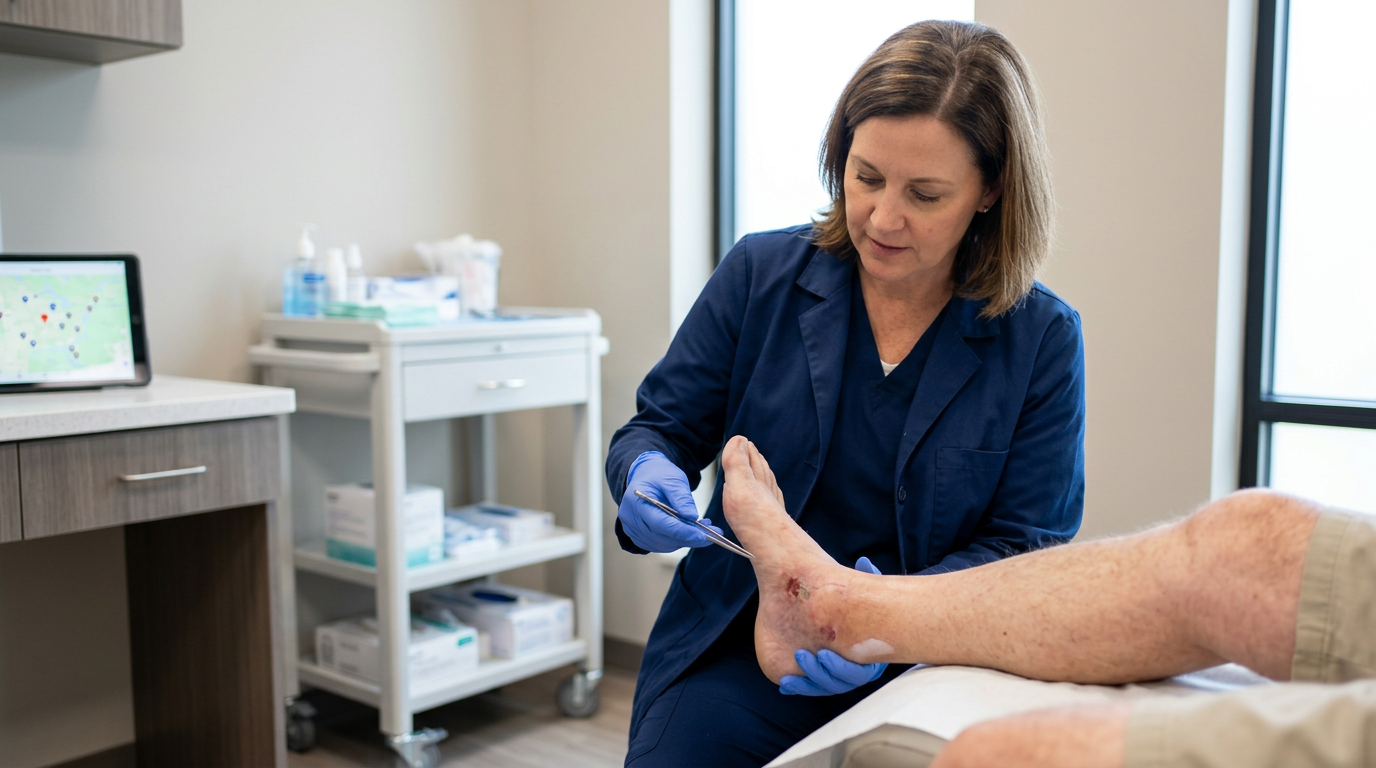
Professional wound care usually starts with an exam that looks beyond the surface. It’s commonly recommended to ask whether the clinic evaluates infection risk, checks circulation (pulses and, when needed, noninvasive vascular testing), and assesses sensation/neuropathy—because these factors often influence healing and safety.
Depending on the wound type, care may include:
- Wound bed management (cleaning, selecting dressings based on drainage/tissue, and debridement when appropriate).
- Offloading (reducing pressure with a boot, specialized insert, or other device—commonly used for plantar/diabetic ulcers).
- Infection evaluation (deciding when cultures, imaging, or antibiotics are needed).
- Follow-up cadence (many wounds benefit from regular reassessment and dressing adjustments; frequency varies by severity, drainage, and risk factors).
If you want a preview of what follow-ups often cover, see Wound Care Follow-Up Visit FAQs. If diabetes is part of the picture and you’re willing to travel outside Royston, this overview on where to find diabetic wound care (Toccoa, GA) explains what people commonly look for in diabetic-focused wound care.