
What Is the Difference Between Diabetic Shoes and Regular Shoes?
Quick answer: Diabetic shoes (also called therapeutic or extra-depth shoes) are designed to reduce pressure, friction, and in-shoe “hot spots” that can lead to blisters and ulcers—especially when diabetes-related neuropathy, deformity, or swelling is present. Compared with regular shoes, they typically offer extra depth/width, smoother interiors, more stability, and space for prescribed inserts. Regular shoes can work if they fit correctly and you’re low risk.
Diabetic shoes vs regular shoes: what’s built differently (and why it matters)
Diabetic shoes are made to lower the chance of skin breakdown by improving fit, reducing rubbing, and distributing pressure more evenly—issues that become higher-stakes when protective sensation is reduced (neuropathy) or when deformity/callus concentrates pressure. International diabetic-foot guidance supports therapeutic footwear to help prevent recurrent ulcers in people at risk, particularly those with prior ulceration or deformity-related high pressure ( International Working Group on the Diabetic Foot (IWGDF) Guidelines).
Common design differences include:
- Extra depth/volume to accommodate toe deformities, swelling, and prescribed inserts without creating top-of-toe pressure.
- More width options and adjustability to reduce side-wall pressure and accommodate day-to-day swelling.
- Smoother interiors with fewer prominent seams or stiff edges that can irritate skin.
- More stable structure (heel counter and sole) to limit excess motion that increases friction and shear.
- Insert compatibility so pressure-relieving insoles can sit properly without crowding the foot.
Regular shoes may fit well for many people, but they’re not consistently designed to accommodate deformity, swelling, or medical-grade inserts—and a “small” rub spot can become a big problem if you don’t feel it.
Terminology that’s easy to mix up: shoes vs inserts vs offloading
These terms are related but not interchangeable:
- Diabetic shoes / therapeutic shoes / extra-depth shoes: the shoe itself—built for more room, fewer internal irritants, and better stability/pressure distribution.
- Custom inserts / orthotics: devices that go inside the shoe to help redistribute pressure, accommodate prominences, and reduce callus-forming “hot spots. ” They can be used with diabetic shoes or, in some cases, with a well-fitting regular shoe that has enough depth.
- Offloading footwear/devices: used when there is an active ulcer (or a very high-risk pressure area) to deliberately take weight/pressure off the wound. This may include removable cast walkers, specialized offloading shoes, or other clinician-directed options. IWGDF guidance emphasizes offloading as a cornerstone of plantar ulcer care, because shoe changes alone often don’t reduce pressure enough for healing ( IWGDF Guidelines).
Practical takeaway: fit problems are often addressed by the right shoe shape/size; pressure problems may need inserts; and open wounds often require dedicated offloading devices rather than “better sneakers.”
A quick at-home fit test (to catch pressure before it becomes a wound)
Even the best-designed shoe can fail if the fit is off. Use this simple check when you try on shoes and during the first week of wear:
- Toe box depth test: with the shoe on and laced/fastened, make sure the upper is not pressing on the tops of toes, toe joints, or nails. Any contact that leaves a mark after wear is a warning sign.
- Heel slippage test: walk 20–30 steps. Mild movement can be normal, but repeated rubbing at the heel collar (or a “lifting” heel) increases blister risk—try a different size/width or a different last (shape).
- Hot-spot check: after 10–15 minutes of walking, remove the shoe and inspect your skin (or have someone help). Look for redness, shiny rubbed areas, or new callus forming—these are early signs of excess pressure/friction.
- In-shoe inspection: before putting shoes on, feel inside for seams, curled liners, or debris. This is especially important if sensation is reduced.
If you have diabetes and neuropathy, daily foot checks are widely recommended because problems may not hurt even when tissue is being damaged ( American Diabetes Association (ADA): Foot complications).
When shoe choice becomes a medical issue (don’t wait)
Get prompt evaluation (rather than only changing shoes) if you have diabetes and notice: a blister/sore that isn’t improving, skin breakdown, drainage, increasing redness or warmth, spreading swelling, black/gray discoloration, fever, or new/worsening numbness. These can signal infection, reduced blood flow, or an ulcer that needs medical treatment and possibly offloading ( ADA: Foot complications).
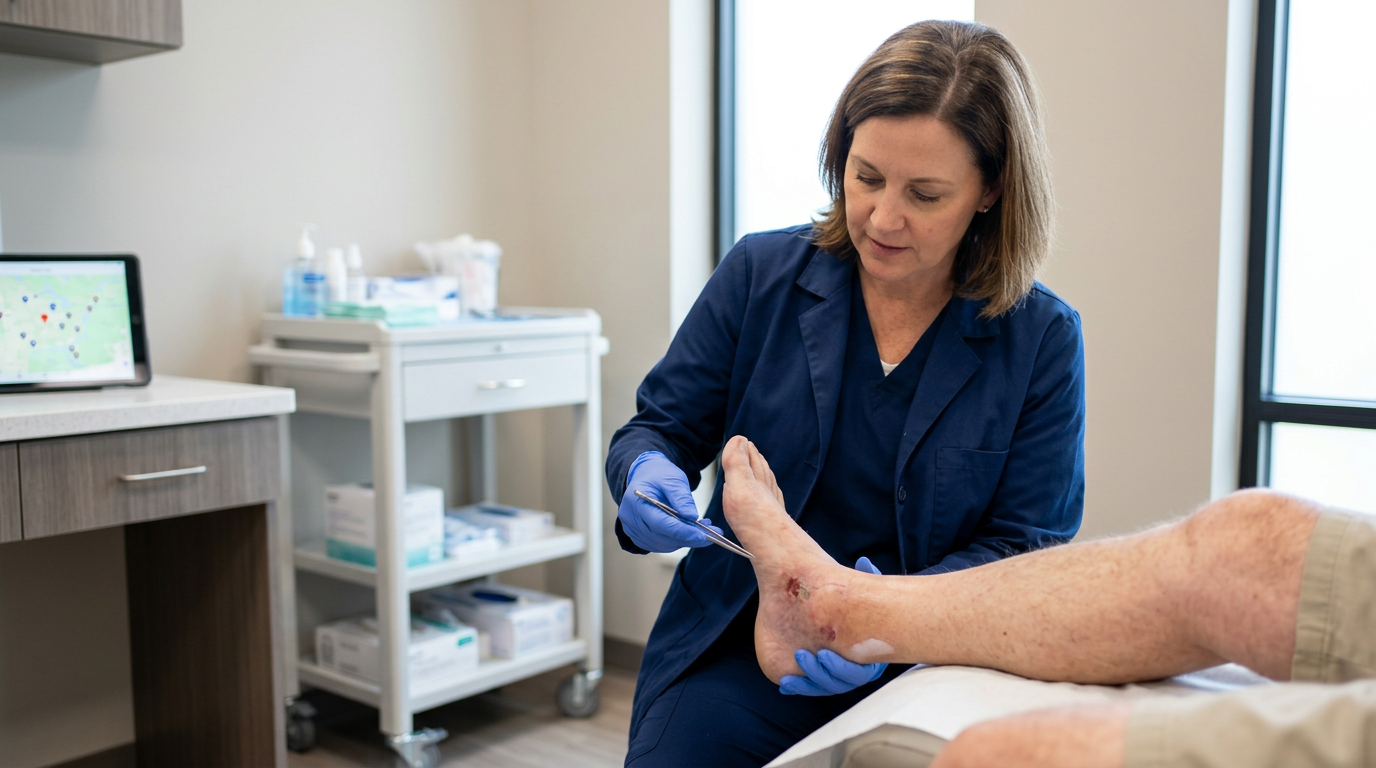
In a podiatry visit for diabetic foot care, clinicians commonly assess skin integrity, pulses/circulation screening, protective sensation (neuropathy testing), deformities/callus patterns, and where pressure is concentrating—then match solutions to the problem (shoe fit changes, inserts/orthotics, or offloading when needed).
Get Cure Podiatry and Wound Care first on Google. Add us as a preferred source and Google will show more of our content in your Top Stories and AI results. Add Cure Podiatry and Wound Care as a preferred source on Google →