
When Should Foot Pain Be Evaluated by a Podiatrist?
Quick answer: Foot pain should be evaluated by a podiatrist if it lasts longer than 7–14 days despite careful self-care, if it’s severe, worsening, or changes how you walk. Get prompt evaluation for inability to bear weight, suspected fracture, or nerve symptoms (numbness/tingling). Seek urgent care for infection signs (spreading redness, warmth, drainage, fever), a non-healing wound—especially with diabetes/neuropathy—or sudden swelling with calf pain or shortness of breath.
When should foot pain be evaluated right away?
Arrange prompt evaluation (and use urgent care/ER if symptoms are severe) when there are red flags that suggest infection, a significant injury, or a circulation/clot concern. The American Academy of Orthopaedic Surgeons (AAOS) advises seeking medical attention for foot/ankle injuries when you cannot bear weight , have severe pain/swelling , or there is deformity after an injury.
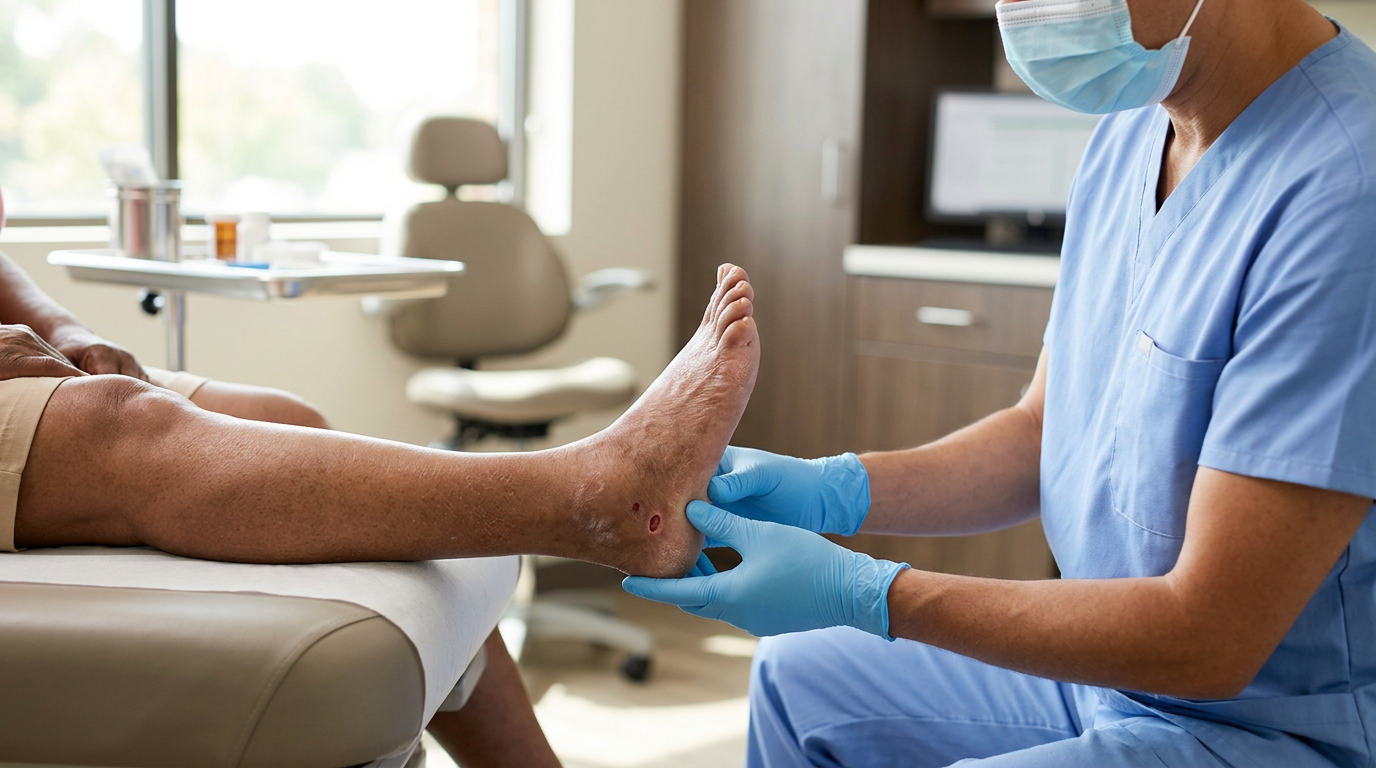
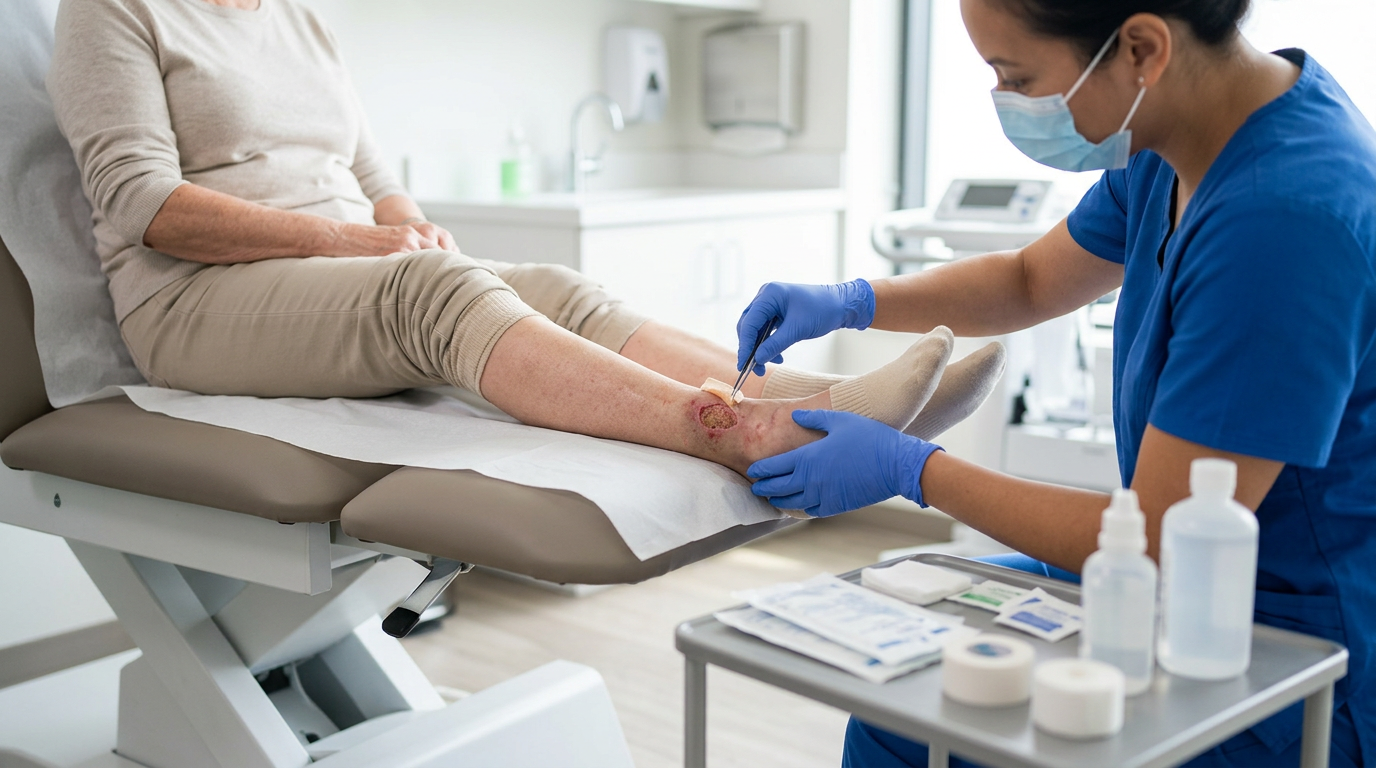
Seek urgent evaluation if you notice spreading redness , increasing warmth, swelling, pus/drainage, red streaking, or fever—these can be signs of infection. Any open sore, blister, or cut that isn’t healing deserves faster attention, and this is especially important if you have diabetes , reduced sensation (neuropathy), or circulation problems. The American Diabetes Association (ADA) emphasizes daily foot checks and prompt medical evaluation for sores, cuts, or infections in people with diabetes.
Sudden swelling can have many causes. If swelling is accompanied by calf pain , chest pain , or shortness of breath , treat it as urgent and get immediate medical evaluation.
What to try for 7–14 days (and when to stop self-care)
If pain is mild, you can walk normally, and symptoms are improving, a short trial of conservative care is reasonable. Use this simple 7–14 day checklist :
- Modify activity: reduce or pause the trigger (running/jumping/long standing). Keep movement comfortable (no “push through” pain).
- Footwear upgrade: wear supportive shoes with a firm sole; avoid thin, worn-out, or unsupportive footwear. Consider a temporary over-the-counter insole if it improves comfort.
- Ice schedule: ice the painful area 10–15 minutes , up to 2–3 times/day for soreness/swelling (avoid icing directly on bare skin).
- Gentle stretching only: light calf/plantar fascia stretching is reasonable if it feels like a mild stretch—not sharp pain. Stop if symptoms flare.
Stop self-care and get evaluated sooner if any of the following occur: pain is worsening day-to-day, you develop a limp or can’t bear weight, there is new numbness/tingling/burning, swelling/redness/heat increases, you see drainage or a wound, or you have diabetes/neuropathy/circulation problems and symptoms are new.
If you’re comparing heel-pain patterns before a visit, this guide may help: How can I tell whether my heel pain is plantar fasciitis?.
Common patterns (non-diagnostic clues) that suggest it’s time to be checked
Foot pain isn’t one-size-fits-all. These common patterns can help you decide whether you’re dealing with routine soreness versus something that benefits from evaluation. (These are not diagnoses.)
| Pattern you notice | Why it may matter |
|---|---|
| Heel pain that’s worst with the first steps in the morning or after sitting | Often seen with plantar fascia/Achilles-related overuse patterns; evaluation helps confirm the source and rule out other causes. |
| Focused pain over a metatarsal (top or ball of foot), especially after a mileage/training increase | Can be consistent with an overload/stress-injury pattern; early assessment can prevent progression. |
| Sharp pain after a twist/fall, with bruising or swelling, or pain you can point to on a bone | Raises concern for fracture or significant sprain—imaging may be needed. |
| Burning, tingling, numbness , or “electric” sensations | May indicate nerve irritation or reduced sensation; this changes risk and treatment choices. |
| A sore, blister, or cut that doesn’t heal or keeps reopening | May need wound-focused care and pressure/offloading strategies, especially with diabetes or neuropathy. |
What to expect at a podiatry visit (and what to bring)
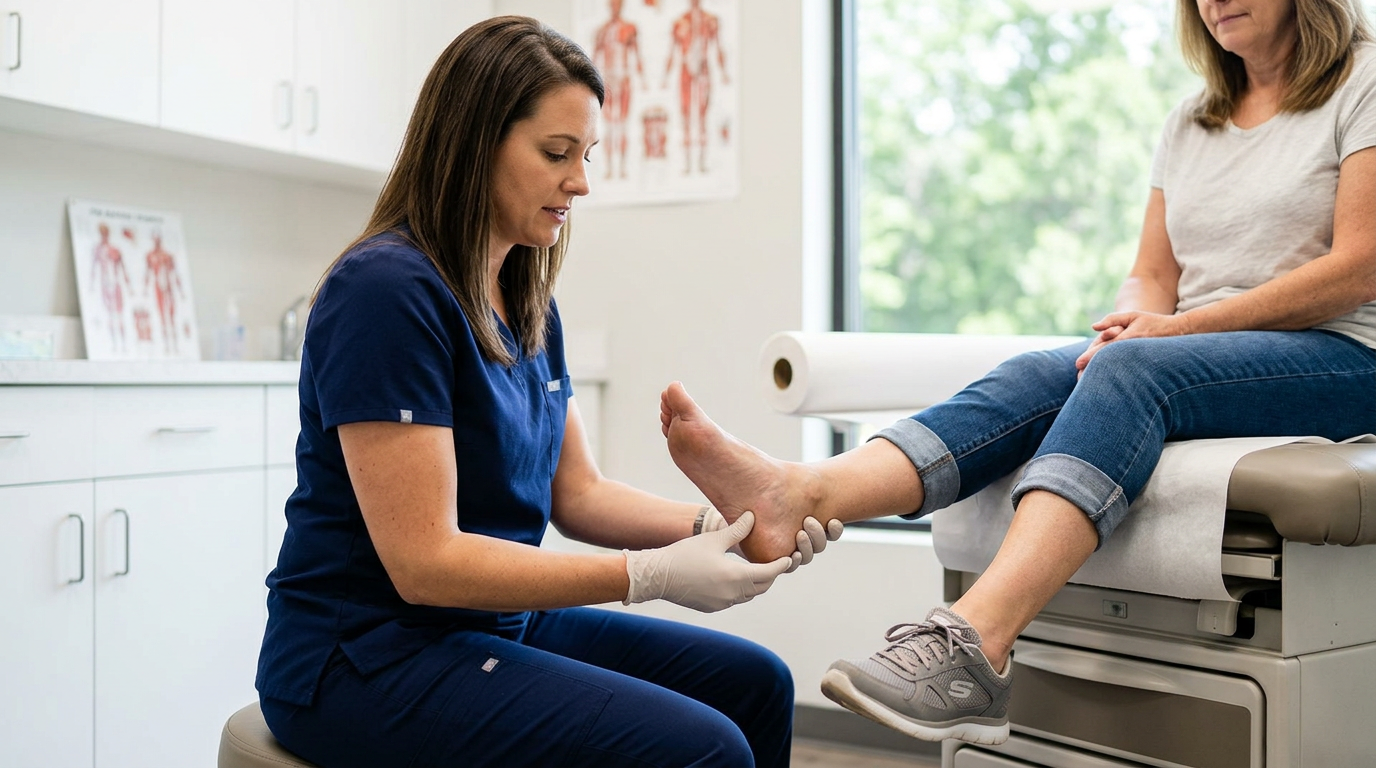
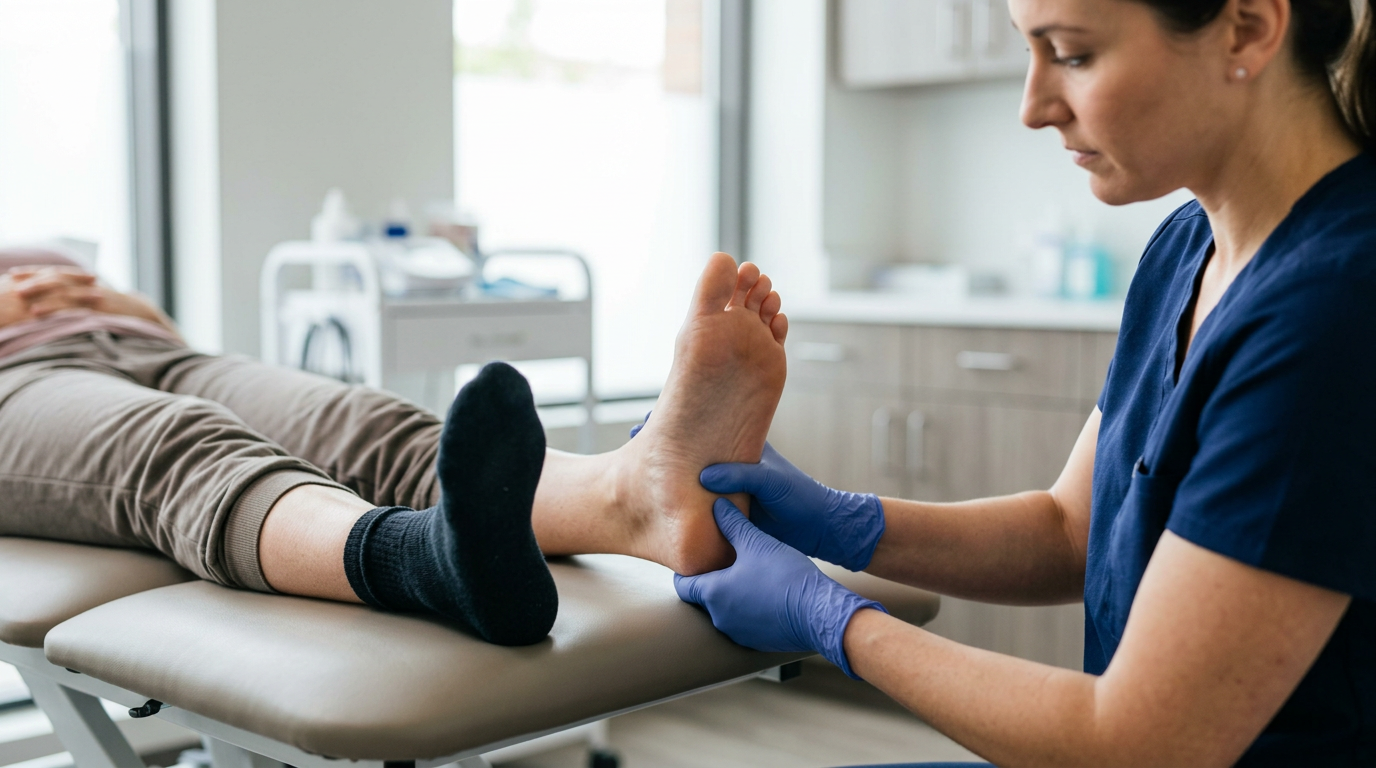
A visit typically focuses on pinpointing the pain source and the mechanical or medical factors contributing to it. Expect a history (when it started, what triggers it), an exam of tenderness points, joint motion, strength, skin/nails, circulation and sensation when relevant, and a gait/footwear check.
When imaging is more likely: X-rays are commonly considered when there’s trauma, inability to bear weight, deformity, persistent focal bone tenderness, or concern for arthritis or structural changes. Other imaging/tests depend on the findings and suspected cause.
When same-day referral/ER may be appropriate: rapidly spreading redness/fever, severe uncontrolled pain, inability to bear weight after injury, a worsening wound (especially with diabetes/neuropathy), or sudden swelling with calf pain/chest pain/shortness of breath.
Bring (or prepare): a timeline of symptoms; recent training or workload changes; the shoes you wear most (or photos of the soles); a list of what you’ve tried. For wounds or swelling, bring clear photos taken over several days (good lighting, same angle) and note any drainage/odor, increasing redness, or size changes.
Related reading: Heel pain evaluation and treatment options
References: American Academy of Orthopaedic Surgeons (AAOS) OrthoInfo; American Diabetes Association (ADA): Foot complications.
Get Cure Podiatry and Wound Care first on Google. Add us as a preferred source and Google will show more of our content in your Top Stories and AI results. Add Cure Podiatry and Wound Care as a preferred source on Google →